
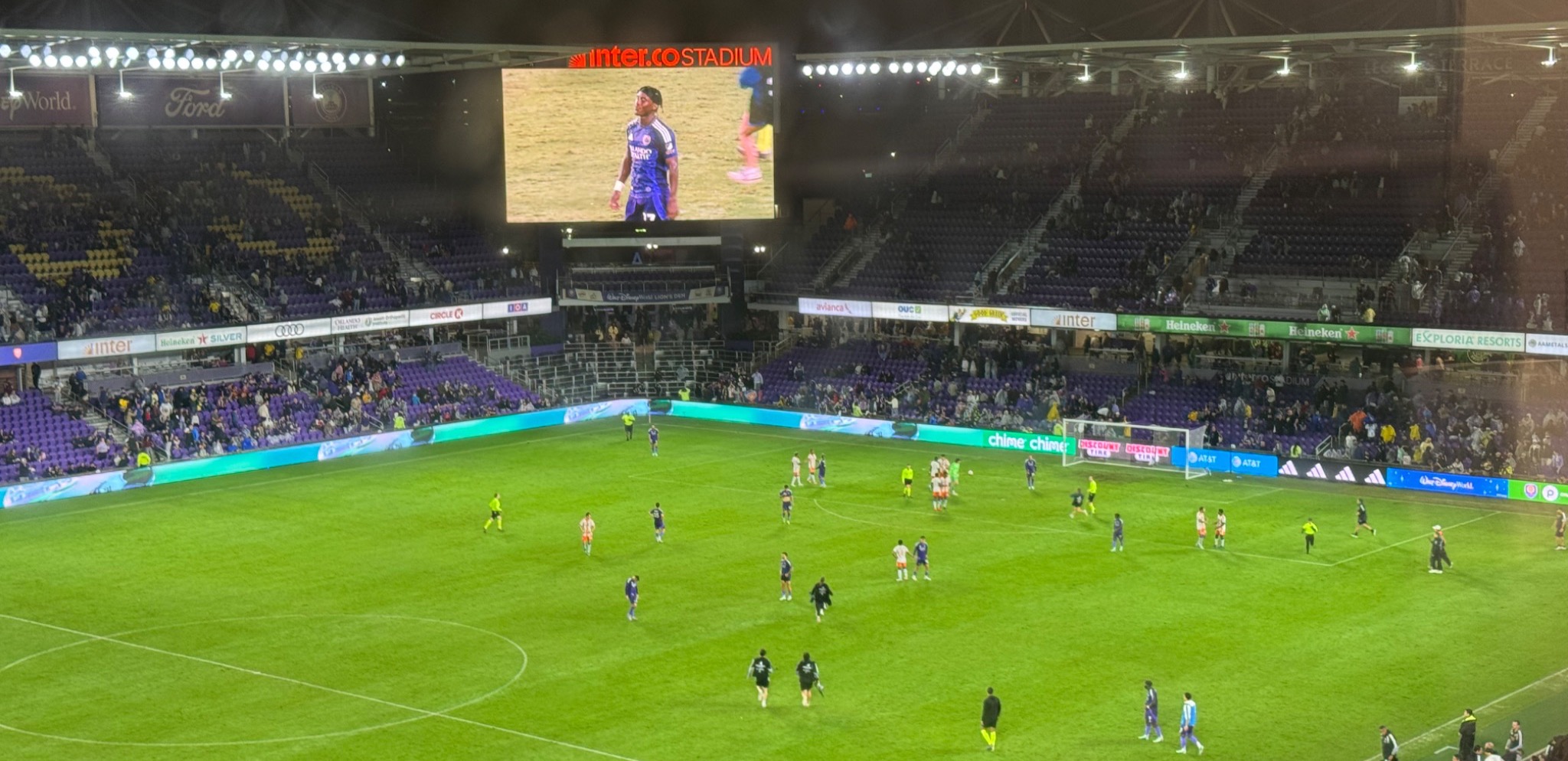
Orlando City Created Enough to Survive. FC Cincinnati Made Them Pay Anyway
Reporting from Inter&Co Stadium, Orlando.
For a few minutes before kickoff, Inter&Co Stadium belonged to Antoine Griezmann and Martín Ojeda.
Griezmann was recognised for winning MLS Newcomer of the Year. Ojeda, announced earlier Thursday as the winner of MLS Goal of the Year, received his own moment in front of the Orlando City supporters.
It was a fitting celebration of the two players who had come to define so much of Orlando’s attacking resurgence.
By the end of the night, however, neither individual recognition nor Orlando’s ability to create chances could prevent their season from ending.
FC Cincinnati advanced from the Eastern Conference Wild Card with a 3-1 victory, powered by two goals from Evander and a late Samuel Gidi strike that finally ended Orlando’s resistance.
For Orlando, the defeat will be difficult to separate from a simple reality.
They were not good enough in either penalty area.
They created enough chances to score more than once. They forced Roman Celentano into important saves. They found space behind a Cincinnati defence that looked vulnerable throughout the first half.
But when the opportunities came, Orlando failed to take enough of them.
At the other end, Cincinnati did.
Orlando found the spaces they wanted
The tactical matchup immediately offered intrigue.
Cincinnati lined up with their familiar three-at-the-back structure and a three-man midfield, while Orlando operated in a 4-2-2-2 that often became more fluid when Griezmann dropped deeper to receive possession.
Cincinnati controlled much of the ball early.
That did not necessarily mean they controlled the danger.
Orlando appeared comfortable allowing Cincinnati possession before attacking more directly, using longer passes, competing aggressively for second balls and looking to release Iván Angulo into space.
The approach began producing opportunities.
In the 23rd minute, Ojeda drifted towards the left before delivering an excellent ball into the area. Marco Pašalić met it from close range, but Celentano produced a huge save to keep the match scoreless.
Three minutes later, Orlando broke through.
Angulo helped create the opening before Ojeda found himself through on goal. The Argentine slipped his finish beyond Celentano, watched it kiss the post and roll into the net.
1-0.
At that point, Orlando looked capable of taking control of the tie.
The most encouraging aspect was not simply the goal.
It was where Orlando were finding their opportunities.
Miles Robinson was making his first start for Cincinnati after an extended spell away from the starting lineup, and Orlando repeatedly targeted the spaces around him.
Angulo and Ojeda pulled towards his side, while Griezmann looked for opportunities to run beyond the Cincinnati back line.
It worked.
Orlando repeatedly found themselves running behind Cincinnati’s defence, with both Griezmann and Ojeda getting opportunities that could have given the home side a far more comfortable advantage.
The problem was that the second goal never came.
In a knockout match, that matters.
Cincinnati survived Orlando’s best spell
The pre-match question surrounding Cincinnati was how dangerous they could be with Kévin Denkey beginning on the bench.
Denkey had scored 17 regular-season goals, while Evander entered the playoffs after producing 14 goals and 17 assists.
Without their leading scorer from the start, Cincinnati paired Tom Barlow with Evander in attack.
For much of the first half, Orlando handled that arrangement reasonably well.
Cincinnati enjoyed more possession, but Orlando carried the greater goal threat.
Yet the score remained 1-0.
Then, in the 41st minute, Orlando gave Cincinnati exactly the opening they needed.
Following a short corner, Pavel Bucha turned Pašalić inside the penalty area far too easily. Pašalić brought him down, leaving the referee with a straightforward decision.
Penalty.
Evander stepped forward and finished confidently.
1-1.
It was a brutal equaliser for Orlando because it arrived during a half in which the Lions had created enough to be comfortably ahead.
At halftime, Orlando had put five shots on target compared with Cincinnati’s two.
Cincinnati had controlled more of the possession.
Orlando had controlled more of the danger.
Only one of those teams had fully punished the other’s mistakes.
Cincinnati changed the defence and changed the game
Pat Noonan did not wait long to address what had gone wrong.
Miles Robinson and Nick Hagglund were both withdrawn at halftime, with Alvas Powell and José Martínez introduced.
Robinson’s removal was particularly significant.
Orlando had targeted his side repeatedly during the first half, and Powell immediately inherited much of the responsibility for dealing with Angulo.
The changes gave Cincinnati a different defensive look.
Then, four minutes into the second half, the visitors took the lead.
Barlow’s initial effort was saved by Maxime Crépeau, but Cincinnati reacted first.
Barlow recovered the rebound and, rather than forcing another attempt, found Evander.
The Brazilian did the rest.
2-1 Cincinnati.
His second goal transformed the match.
Orlando were no longer trying to build on an advantage.
They were chasing their season.
Orlando created the chances to stay alive
This was not a case of Cincinnati simply shutting the game down after taking the lead.
Orlando continued creating.
Eduard Atuesta became increasingly influential as he found passes through Cincinnati’s midfield and into dangerous areas.
In the 67th minute, Atuesta produced a beautiful one-touch pass that released Ojeda.
It was the type of chance Orlando needed.
Ojeda dragged his shot wide.
Ten minutes later, Orlando came even closer.
Another excellent sequence involving Atuesta created space inside the penalty area before Ojeda found himself with another opportunity.
This time the effort was cleared off the line by Gidi.
The reaction around Inter&Co Stadium said everything.
Orlando had not stopped threatening Cincinnati.
They simply could not convert the threat into goals.
That distinction is important.
The post-match assessment should not be that Orlando lacked attacking quality.
They showed plenty of it.
Ojeda scored.
Angulo caused problems.
Atuesta began finding openings.
Celentano was required to make important interventions.
The chances were there.
The finishing was not.
And in a single-elimination playoff match, chances eventually stop being encouraging.
They become regrets.
Evander made sure Orlando paid
If Orlando’s night was defined by opportunities left unfinished, Cincinnati’s was defined by ruthlessness.
Evander was the clearest example.
With Denkey starting on the bench, Cincinnati needed their other attacking star to take greater responsibility.
He did.
He converted the first-half penalty.
He finished the rebound sequence shortly after halftime.
Then, with Orlando committing more players forward in search of an equaliser, he helped create the goal that ended the contest.
In the 85th minute, Evander found Gidi with a beautifully weighted pass.
Gidi cut inside at the edge of the area and curled his finish beyond Crépeau.
3-1.
Game over.
Season over.
Cincinnati were heading to Nashville.
The defensive questions returned when they mattered most
Orlando entered the Wild Card having just produced a 1-0 victory over New England.
That clean sheet mattered because it followed a stretch in which Orlando had conceded eight goals across three matches.
The question entering Thursday was whether the defensive resilience against New England represented something Orlando could carry into the postseason.
Cincinnati provided the answer.
The first goal came from an avoidable penalty.
The second came after Orlando failed to deal with the second phase following Crépeau’s initial save.
The third came after Evander was allowed the time and space to find Gidi, who was then able to shift inside and finish from the edge of the area.
Different situations.
The same consequence.
Orlando were punished.
This was also a Cincinnati side that began the match without Denkey in the starting XI.
That makes the defensive outcome even more disappointing.
Orlando knew where Cincinnati’s creativity would come from.
Evander had produced 31 regular-season goal contributions.
He was the player the match demanded Orlando control.
Instead, he scored twice and created the move that ended their season.
A quiet night for Griezmann
For all the attention surrounding Griezmann before kickoff, the Frenchman never truly imposed himself on the match.
That was surprising.
His arrival had transformed Orlando’s season.
Fourteen goals and eight assists in only 18 regular-season appearances earned him Newcomer of the Year and helped carry Orlando back into the postseason.
But playoff football does not care what came before.
Against Cincinnati, Griezmann struggled to consistently influence the areas where Orlando needed him most.
There were moments when he dropped into midfield looking to connect play, and there were first-half opportunities to run behind Cincinnati’s defence.
But as the game became increasingly desperate, Orlando’s biggest name became increasingly peripheral.
Ojeda remained the more visible attacking threat.
He also leaves the night with the greater regrets.
He scored Orlando’s only goal but had opportunities to change the match again in the second half.
On another night, perhaps one goes in.
There is no another night now.
Orlando’s season ends with a familiar contradiction
That may be the most frustrating part for Orlando.
This was not a 3-1 match in which they were comprehensively outplayed.
For long stretches, particularly in the first half, Orlando were the more dangerous team.
They found the weaknesses they expected to find.
They attacked Robinson’s side.
They created chances.
They forced saves.
They produced five first-half shots on target despite Cincinnati having more possession.
But possession does not decide knockout matches.
Neither do promising attacks.
Goals do.
Cincinnati were better when the match reached the moments that mattered most.
Orlando were not.
The Lions entered the night celebrating two of the brightest individual achievements of their season.
Ojeda had produced the best goal in MLS.
Griezmann had been recognised as the league’s best newcomer.
Those honours were deserved.
But playoff football has a particularly cruel way of separating individual accomplishment from collective success.
By the final whistle, the celebrations belonged to Cincinnati.
Orlando will have an entire offseason to think about the chances they missed, the goals they conceded and the uncomfortable truth that ultimately defined their final game of 2026.
They created enough to win.
They simply did not finish enough to survive.

0 Comments Add a Comment?